
About 40 percent of the nearly 10,000 square kilometres (km2) of the Sunderbans lies within West Bengal and the rest part is in Bangladesh.
Mangrove litter decomposition in Sunderbans ecosystems
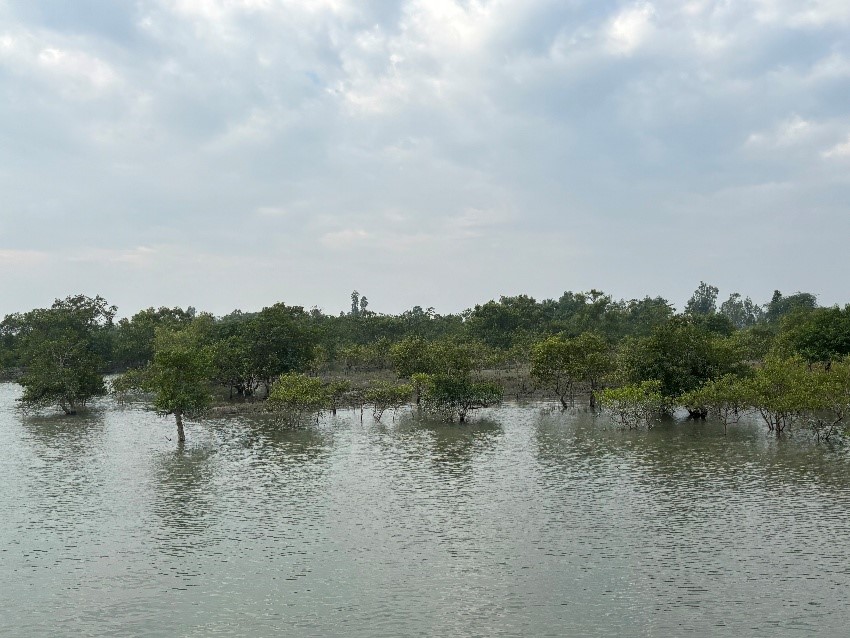
Looking into the importance of mangrove leaf litter in regulating the sediment carbon sequestration and nutrient flux in Sunderbans ecosystem, a project was undertaken by ICAR-CIFRI at Jharkhali island of Sunderbans for determining the decomposition of different mangrove leaf litter.Seasonal litter fall was highest in Geon (Excoecaria agallocha). Litter from Avicennia group contained more nitrogen and carbon. Decomposition rates of various mangrove litters were estimated through in-situ litter-bag experiments using mangrove leaf litter and during the decomposition process, it was observed that most susceptible and resistant litter with respect to mass loss were Geon (Excoecaria agallocha) and Taura (Aegialitis rotundifolia) respectively. The study offered an important insight into the contribution of different mangrove species in carbon sequestration and nutrient dynamics in mangrove ecosystem of Indian Sunderbans.
Assessment of environmental variability, nutrient dynamics, biodiversity, fish stock in mangrove ecosystems of Sunderbans
Fish distribution and assemblage pattern in relation to environmental variables were studied in the selected stretches (Jharkhali, Sandeshkhali, Pathar Pratima, Frazerganj and Nischintapur) of Indian Sunderbans. Estimation of fish landing from winter bag net fisheries along the lower Sunderbans revealed a major shift in the fish catch composition with dominance of trash fishes and sardines. Harpadon nehereus, a dominant species in winter bag net fishery, 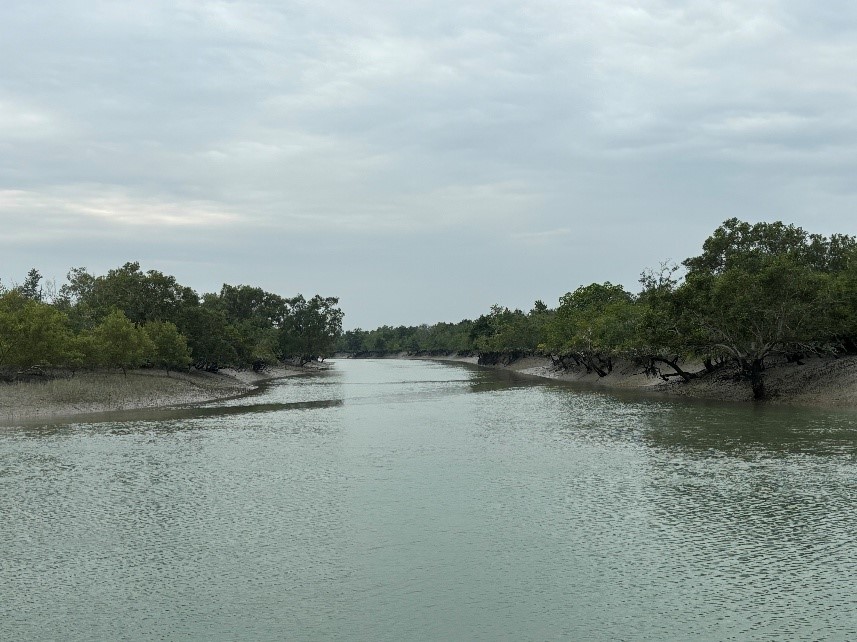 showed a reduction from 18.34% (1362.92 tonnes) in 2009-10 to 12.33% in 2015-16 (1475.29 tonnes). Sartoriana spinigera was the only freshwater crab found from the selected stretches of Sunderbans. A total of 84 finfish and shellfish species belonging to 38. The phytoplankton profile and their spatio-temporal dynamics at various geographical locations of the Sunderbans eco-region stand unique in providing comprehensive information on the status of the ecological interaction with certain phytoplankton groups being impacted due to gradual increase of anthropogenic load. Water quality parameters, such as temperature, total alkalinity, salinity, PO4−P, SiO4−Si and SO42 – were found to have deterministic influence on the distribution, abundance and diversity of phytoplankton in Indian Sunderbans.